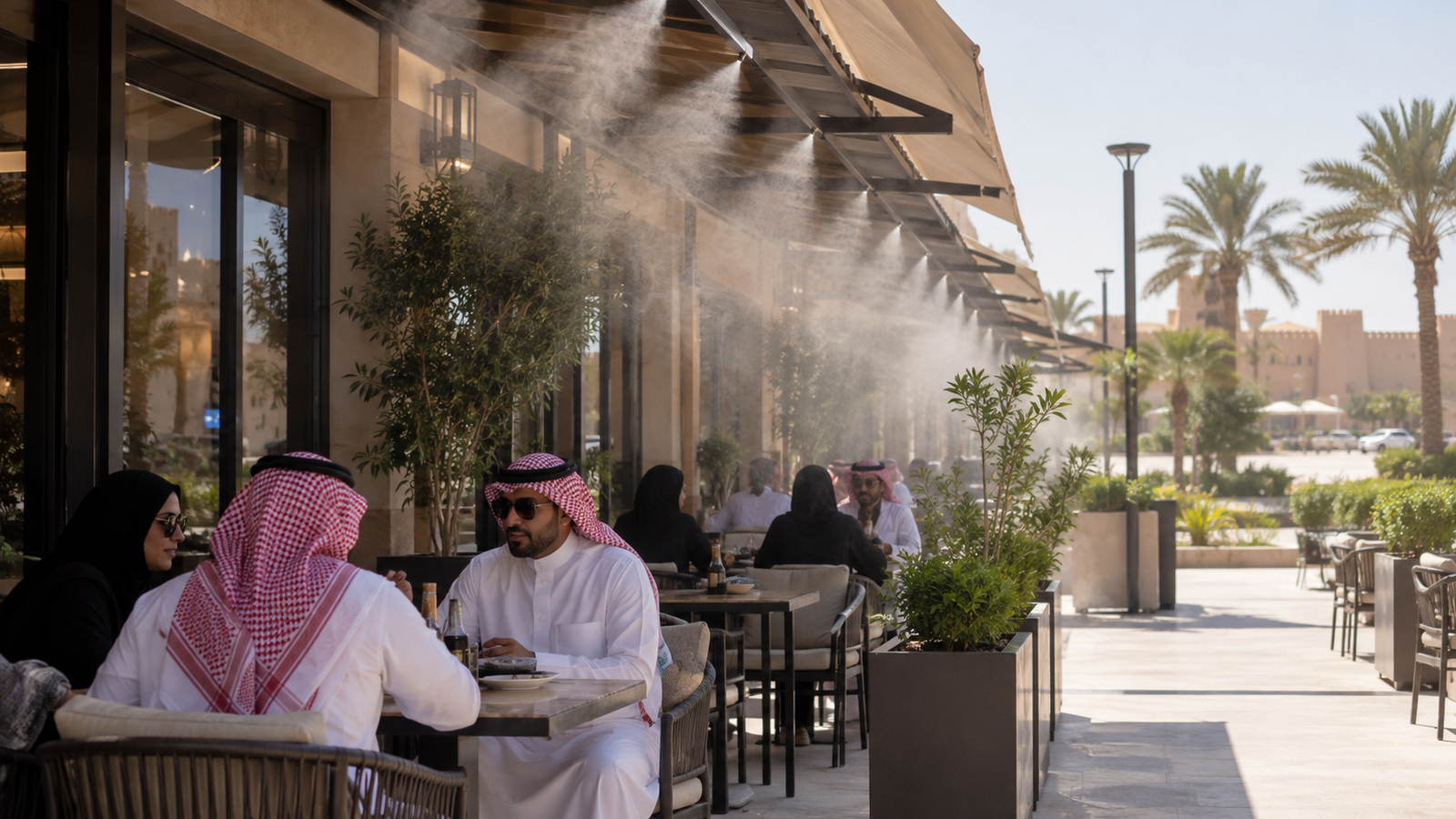

On hot days outdoor seating gets hard to use, and a misting system is one of the solutions restaurants and cafés use to cool the air. Its success depends on correct design: the pump, the nozzles, the coverage and the installation. A randomly installed system may wet your guests more than it cools them. This guide explains how the system works and how to choose the right misting system for your restaurant, step by step.
How Does a Misting System Work?
A pump raises water pressure and sends it through pipes to very small nozzles, so the water leaves as a fine mist that evaporates into the air. The idea is simple, but the details make the difference: insufficient pressure means large droplets that wet the place, and poor nozzles mean repeated clogging.
What Is Evaporative Cooling?
When water evaporates it absorbs heat from the surrounding air, so the temperature of the area drops. The finer the mist, the better the chance it evaporates before wetting people and furniture. This is why nozzle quality and pressure matter so much: they decide whether the system “cools” or “wets”.
Is a Misting System Suitable for Every Outdoor Space?
Not always. It suits open or semi-open outdoor areas best, but its efficiency depends on the conditions around it, as explained next. Closed or poorly ventilated spaces benefit less, because humidity builds up inside them.
The Effect of Heat, Humidity and Wind
- Heat: the hotter and drier the air, the easier the evaporation and the better the cooling.
- Humidity: with high humidity evaporation drops and people may feel wet.
- Wind: it can carry the mist away from where it is needed.
That is why the first step in choosing is knowing your site’s conditions: a hot dry city gives the best misting results, while a humid coastal area needs a more careful assessment, and possibly combining misting with other solutions such as fans or outdoor cooling units.
Choosing the Misting Pump
The pump is the heart of the system. Ask about the pressure it runs at, how many nozzles it supports, its warranty, and whether it needs a water filter. An undersized pump means weak mist and uncovered zones, while a good pump with proper filtration means nozzles that live longer without clogging.
Choosing the Right Nozzles
Good nozzles give a fine mist. Quality, ease of cleaning and ease of replacement matter, since mineral deposits in water can clog them over time. Ask how easily a nozzle can be removed and cleaned, and whether spare parts are available, because one clogged nozzle means a dead spot in coverage.
System Elements and What to Ask About
| Element | Its role | What to ask about |
| Pump | Raises water pressure to the nozzles | Pressure, supported nozzle count, warranty |
| Nozzles | Turn water into fine mist | Mist quality, ease of cleaning, spares availability |
| Filters | Clean the water from deposits | Filter type and replacement cycle |
| Pipes and fittings | Carry the pressurized water | Pressure tolerance and sun resistance |
Determining the Number of Nozzles and Coverage
It depends on the seating area, installation height and nozzle spacing. A correct design before installation prevents dead spots or wet areas. The practical rule: even coverage matters more than a high nozzle count; a well-planned layout with fewer nozzles beats many nozzles in the wrong places.
Water and Electricity Consumption
Consumption varies with nozzle count, pump pressure and operating hours, so ask the supplier to estimate it for your project before contracting. Knowing the running consumption helps you calculate the real monthly cost instead of looking at installation cost alone.
Maintenance and Cleaning
- Clean filters regularly.
- Check nozzles and replace clogged ones.
- Check for leaks in the pipes.
- Check the pump.
Regular maintenance is simple but essential; neglecting filters leads to clogged nozzles, and neglecting nozzles leads to incomplete coverage, and so on.
Mistakes in Installing Misting Systems
- Installing without a design.
- Nozzles too far apart or too close.
- Ignoring water quality.
- Installing in a spot exposed to strong wind.
- Choosing a small pump for a large area.
- Forgetting drainage for excess water in gathering spots.
When Is Misting Suitable and When Do You Need Another Solution?
Misting suits cooling the air in open seating. It does not replace shade, so it is best combined with awnings or curtains: the awning stops direct sun, and the mist cools the air beneath it. See: Protecting Outdoor Seating in Restaurants.
A Practical Design Example for a Restaurant
A restaurant with a medium west-facing outdoor area: the design starts by setting the nozzle line along the seating perimeter so the mist covers the sitting zones without aiming directly at tables, while accounting for the prevailing wind direction at the site. After a trial run, the weak or excessive zones are observed and adjusted before handover. This field testing is the difference between an “installed” system and a “designed” one.
Questions to Ask the Supplier Before Installation
- How many nozzles are proposed, and why that number for my area?
- What is the pump pressure, and does it suit the nozzle count?
- Does the quote include a water filter suited to my water quality?
- Is there a trial run and adjustment after installation?
- What is the suggested maintenance schedule, and who carries it out?
Frequently Asked Questions
Does misting wet the guests?
With good design and fine nozzles the mist mostly evaporates before wetting, but this is affected by humidity and wind.
Does it need maintenance?
Yes, cleaning filters and nozzles regularly.
Can it be installed in an existing restaurant?
Usually yes after a site visit.
Does it work with ordinary water?
It depends on the water quality in your area; high-mineral water needs better filtration and more frequent nozzle maintenance.
Can it be switched off in specific zones only?
In designs split into separately controlled zones, yes. Ask about this option if your seating is used partially at some times.
Read Also
Protecting Outdoor Seating in Restaurants: Practical Solutions Against Sun, Dust, and Wind
Adjustable Aluminum Awnings: Advantages, Uses, and How to Choose Them
Want a Misting System for Your Restaurant?
Contact Steam Trading for a site visit and a suggested design.